Showing posts with label Guest Blog. Show all posts

Tuesday, 12 November 2013

Guest Blog by Melisa Marzett: To Kill a Mockingbird by Harper Lee


It is strange but 'To Kill a Mockingbird' appeared in my collection accidentally long time ago.  Once surfing book stores I noticed an intriguing title "To Kill a Mockingbird."  The title promised a good detective story. I took the book, flipped through pages of cheap, yellowish paper, and, after reading one sentence at random, I could not put it down. Needless to say, I came home with this novel, which is still there on the shelf next to my favorite books.

Now I know that 'To Kill a Mockingbird' is considered to be classical American literature though it was written in the middle of the 20th century. According to numerous survey the book was chosen the best book of the second part of the 20th
century. Written on the autobiographical basis in 1960 by Harper Lee, 'To Kill a Mockingbird' brought Pulitzer Prize to its author in 1961. Finally in 1962 the movie based on this story was released, it was successful too. This is how the world literature became rich in one more brilliant story!

The writer uses an interesting method: the world of adults is shown through the eyes of a child. The narrator of this story is a little girl Jean-Louise Finch (Scout).  At the beginning of the book Scout is 6 years old; at the end she is 9 years old. The girl’s nickname perfectly fits her character. Jean Louise really sees everything, and even if can not explain some things, she still remembers all details. She will tell us her story being a grown up woman, filling every page with bright characters and unforgettable events. 
Scout has lost her mother, she loves with her father and brother John in a small town of Maycomb in the South of United States. The town lives a secluded life and has its own rules, and problems and disturbances of the outside world hardly concern its citizens. The action of the novel takes place in the mid 30s of the last century, during the Great Depression. No wonder that for a girl of her age games and entertainment are the most important things for Scout. She together with her brother and a friend named Jem (by the way, other well-known American writer Truman Capote served as a prototype for this character. Being a child, Harper Lee met Truman Capote). The plot of the novel leads its reader from children’s games to a court case and illegal prosecution of a black man who is accused in raping of a white woman. Scout’s father of, Atticus Finch, becomes devoted lawyer and defender of innocent men and this decision nearly costs him life, and brings tragedy to his daughter.
This story reveals psychological problems of growing up girl who gradually realizes that the world around her is not as well-being, as it seemed to be. Neighbors and even friends do not fit into the usual scheme imposed by the southern society, and Scout has to learn from her father what it’s like to compromise. She has to find out a lot of other incredible facts… For example, Scout discovers that Boo Radley, their neighbor, playing the evil monster in her games, is a kind-hearted man living a difficult life full of suffering.
In addition, in the novel provides us with excellent pictures of provincial life, these scenes could be independent short stories. Just remember the story about a rare event in the life of Meycomb, a snowfall, which Jean-Louise see for the first time in her life. Wonderful language of the writer is another splendid detail of this book. The charm of the book is created thanks to sincere and lively intonations, expressive and vivid details. And despite of the tragic tone of the book, "To Kill a Mockingbird" is full of sparkling humor, as the childhood is the happiest time, and Scout keeps it in her memory as a wonderful period of life first of all.
It is difficult to define the genre of this book. It is impossible to say that 'To Kill a Mockingbird' is a woman's novel, children's book or autobiographical story. Most probably, it's a mixture of these three genres, a brilliant mixture!
After 'To Kill a Mockingbird' Harper Lee wrote nothing. There were rumors that she was working on another novel, however, she realized that it was impossible to reach the level she put in her first book and the second novel was never written. The readers can feel sorry for this situation. But maybe, it was the right choice. It's certainly better than publishing countless books without real power and taste. In the memory of grateful readers Harper Lee remains the author of one masterpiece.

Words by writer, Melissa Marzett. Imaged sourced by Melissa Marzett.You are welcome to contact Melisa Marzett here. You can read other works by Melisa Marzett here.

Tuesday, 3 September 2013

Top 5 Supernatural Reads by Justin Richards, Children's Author

Justin’s Top 5 Supernatural Reads


I’ve always loved ghost stories, tales of the supernatural – the weird and the mysterious.  I grew up in a haunted house, so maybe that’s why. Or perhaps I’m just like that…
Choosing a mere five supernatural reads is tricky. More than tricky – it’s almost impossible. But I’ll try.  I have too many favourites to really describe this as a ‘top 5’, but they are certainly 5 of the best.  I’ve tried to think of stories that aren’t obvious contenders – for example, I love Susan Hill’s The Woman in Black, but I suspect that would make it into most Top 5 lists. So I’ve deliberately left it out!  I’ve also veered towards the more traditional and ‘classic’ works, which sadly excluded some of my favourite writers of the supernatural like Stephen Gallagher – as a bonus 6th choice, read anything of his!
In no particular order then:


Dracula

By Bram Stoker

A real classic, from 1897, and – unlike Frankenstein – written by an experienced author with flair and talent as well as imagination.  A novel that deserves its reputation, if you think you know the story and reading it won’t add anything to your understanding of vampires – or chills – then think again.  Strange to think that when he died, Stoker’s obituaries didn’t even mention Dracula. Now, despite his other achievements, he’s remembered for nothing else…


Anything by M.R. James

The absolute master of the disquieting ghost story.  All his tales are beautifully written, relying on atmosphere and character rather than shock and gore.  The best-known of his works are as you’d expect the most impressive – including Casting the Runes, and “Oh Whistle and I’ll Come to You, My Lad”. But I particularly like The Haunted Dolls’ House (first published in 1923).


Something Wicked This Way Comes

By Ray Bradbury

Bradbury at his best and most unsettling… First published in 1962, this is a story about two young boys, just into their teens, coming to terms with the stark realities of the world and with encroaching adulthood. But the backdrop against which they reach their understanding – a bizarre, dark funfair – combines fantasy and horror in a parable about the conflicting natures of good and evil in us. It’s an obvious, and impressive, influence on so many other writers – most notably Stephen King.

Fevre Dream

By George R. R. Martin

An unusual choice perhaps, especially given that Martin is now most famous for his Song of Ice and Fire series (filmed as Game of Thrones).  But this earlier work (from 1982) is for me this his best novel.  Set against the landscape of the Mississippi and taking place largely on gambling river boats, it’s a vampire tale that is both traditional and avant-garde in its treatment of the creatures. It reinvented vampires long before that became a popular device…

The Hound of the Baskervilles

By Arthur Conan Doyle

The perfect combination of detective fiction and ghost story – perfect!  There are terrific set pieces of both genre – Sherlock Holmes’s assessment of a mysterious note assembled from newspaper clipping, and the attack of the hound.  The atmospheric moors and mire and an apparently haunted house ramp up the atmosphere of supernatural threat.  Of course, we know there must be a rational explanation, and the juxtaposition of the rational and the unexplained forms the central premise of the book.  First published as a serial in 1901-1902, this is another novel that lives up to the hype.  And again if you know the story but haven’t actually read the book, then you’ve missed a treat.  
***

About Justin Richards
Justin is the author of the popular children's series The Invisible Detective, and also the series Time Runners. For younger children, Justin writes the Agent Alfie series - about a boy who finds himself at a school for the children of spies and secret agents. Though Alfie's own dad is a postman.

Justin's novel for older children - The Death Collector - was first published in 2006, followed by The Chaos Code in 2007 and The Parliament of Blood in 2008, with The Chamber of Shadows following in 2010. His series The School of Night also started
in Autumn 2010.

He has co-written several action thrillers for older children with the acknowledged master of the genre Jack Higgins. Justin acts as Creative Consultant to BBC Books' range of Doctor Who titles, advising on the commissioning and editing of all the company's Doctor Who titles as well as writing quite a few himself. 


You can find out more about Justin at his website - www.justinrichardswriter.com and follow him on Twitter @JJCRichards.

***
Justin's new book 'The Wolfstone Curse' is out now, published by Templar Publishing and available from all good bookshops and online. Here is a review by one of our teen reviewers, Sophie-May Hopkins:
'The Wolfstone Curse'
By Justin Richards
Published by Templar Publishing
RRP £6.99 (paperback)
ISBN 9781848775510
Reviewed by Sophie-May Hopkins, aged 15

This is a chilling story of werewolves and other supernatural happenings that lie behind this tale of the dark secret woven into the village of Wolfstone.

Peter thinks his holiday will be dull and boring. How very wrong he is ... a trip to Wolfstone, an old town in the middle of nowhere, is not Peter's idea of fun. Peter's dad is busy down at the "dig" and Peter just wants to go home. When Peter meets Carys and takes an interest into the myths and legends surrounding Wolfstone his holiday starts to get more interesting ... very, very interesting ...

The Wolfstone Curse is a book suitable for all teenagers. The characters are interesting and bring the book to life. The book does not contain a dull moment and this book is good for people who like mystery and werewolves.

**You can also download the free Wolfstone app for your smart phone. Active the app, then point and scan the cover to reveal hidden content!**

Highly recommended for teen readers +


***
A huge thank you from Book a Poet to Justin Richards for his guest blog and to Sophie-May Hopkins for her review!


Friday, 16 August 2013

Guest Blog: Julie Berry’s Top Five Teen Reads

We invited children's author Julie Berry to write a guest blog about her top 5 teen reads - Julie accepted the invite and here is her blog ...

"Distilling a lifetime of amazing reads into a top five list makes my head swim! So many titles have shaped the genre and changed the world, and I couldn’t begin to choose the definitive five. Instead I chose to highlight the five teen titles that affected me the most because I loved them completely. They transported me. They’ve stayed in my heart ever since. I’m an author today because of how deeply these books got under my skin. 

I realize bending the assignment this way is a bit of a cheat. Sit tight; the cheating is just beginning. 


'The Witch of Blackbird Pond' by Elizabeth George Speare (1958). It’s been years since I’ve read this – hmm, time for a read down memory lane! 'All the Truth That’s in M'e might be seen as a bit of an homage to this well-beloved classic. Not that I was thinking so consciously at the time that I wrote it, but looking back, it’s clear this touchstone title influenced me. 


'Keturah and Lord Death' by Martine Leavitt (2006). This story combines impossible romance and a startling premise with lulling, homey, nostalgic storytelling. It’s masterful, and oh, what a heartthrob! This was nominated for a National Book Award in the US. It’s so well-worth hunting down and reading. 


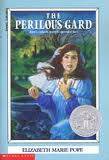
'The Perilous Gard' by Elizabeth Marie Pope (1974). This book doesn’t have the name recognition it deserves. Castles, fairies, kidnapping, underground caverns, and horrifying rituals – it has it all. Historical fiction that’s deeply archetypal, a dual hero’s quest. Is it fantasy? Is it psychodrama? You, the reader, must decide. I love, love, love this book. 


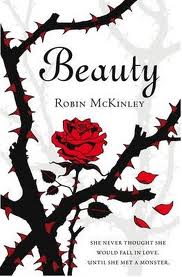
'Beauty' by Robin McKinley (1978). (And let’s cheat and throw in 'The Blue Sword and The Hero and the Crown' while we’re at it.) I have numerous journal entries from my junior high years, filled with ecstatic raptures of joy at Beauty’s existence in the world. I follow Robin McKinley on Twitter. One day I hope to meet her to tell her what her books meant to me. I hope my gushing won’t annoy her.


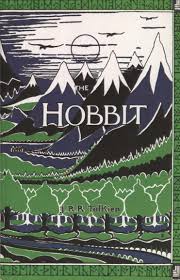
 'The Hobbit', and 'The Lord of the Rings' trilogy by J.R.R. Tolkien (1937—1954). Do I dare call this teen literature? I think I do, whether it’s cheating or not. I re-read the entire saga every Christmas. I know its flaws like I know my own: it’s long. It’s heavy on landscape. Too many orcs to count. It’s half-written in Elvish. Women scarcely appear and only a handful do anything interesting. Nevertheless, always and forever, Tolkien’s will be the fantasy epic, and Middle-Earth will be a regular tourist stop for me."


***

A huge thank you to Julie for taking the time to write a blog for us, we hope you enjoy it as much as we have!


Julie's new book ‘All The Truth That’s In Me’ is out at the end of August, read on to find out more about it ...


‘All The Truth That’s In Me’
By Julie Berry
Published by Templar Publishing, 31st August 2013
RRP £10.99 (hardback)
ISBN 9781848779143

Judith can’t speak. Ever since the horrifying trauma that left her best friend dead, and her without her tongue, she’s been an outsider in her community of Roswell Station. All Judith can do is silently pour out her feelings to the love of her life, the boy who’s owned her heart as long as she can remember – even if he doesn’t know it – her childhood friend, Lucas.

But when Roswell Station is attacked, longburied secrets come to light, the cruel become kind, and Judith is forced to choose: continue to live in silence or recover her voice, even if what she has to say might change her world and the lives around her, forever.

Highly recommended for readers aged 12+

You can find out more Julie Berry and her work at http://www.julieberrybooks.com/
You can find out more about 'All The Truth That's In Me' at Templar Publishing's website http://www.templarco.co.uk/fiction/julie_berry.html
Follow Julie on Twitter @julieberrybooks
Like Julie's Facebook Page 
Follow Julie's blog  


Wednesday, 7 August 2013

B.E.A.M.S Connect Your Soul - Guest Blog by Gayle Gross, Founder of Editing 10 Day Book Clubs


Beams shine down, balance, create structure and produce breadth. You are in sync when life’s events have connection to your soul. A clear connection allows you to react from within. I use B.E.A.M.S. as an acronym to keep this process in check for myself. Maybe the same will work for you.


B – Believe

E – Every

A – Act

M – Makes

S – Sense

Sometimes it is difficult to focus on present conditions because there’s sadness, betrayal, and anger surrounding us. As individuals we often clutter our world and some of that debris ends up attaching itself to us and we begin to form layers that we must then see through. Like an aging star whose outer envelope expands and consumes energy, our layers build. When we are struggling to understand what’s happening in a situation it is possible our layers are clouding our view and sapping our energy.

When you “believe every act makes sense”, you allow your soul to breath life into a situation and you are intellectually able to see a potential outcome, which may otherwise be shadowed by the layers surrounding you.

B.E.A.M.S. allow you to trust decisions you make. The ‘little voice inside’ becomes a natural part of choices you make. The layers surrounding you begin to thin and the importance of clutter subsides. My personal goal is for the layers to be so thin that they no longer insulate my soul from every act I take. I wish the same for you.

*****
Gayle Gross is the Founder of editing 10 Day Book Clubs. Editors and writers spend ten days in a virtual book club going over the first 300 pages of a manuscript. The editor provides a five-page complete copy edit to show the writer's common editing mistakes. The editor also helps the writer with their book jacket description. It is a unique format. Learn more about the program, which developed during a productive and eventful 2011. http://10daybookclub.com


*****

Gayle Gross
Founder Great Authors by 10dbc
Twitter: @gayle_gross
LinkedIn: linkedin.com/in/gaylegross
Facebook: facebook.com/gayle.e.gross
http://10daybookclub.com

Friday, 12 July 2013

How To Find Literary Agent Representation by Writer's Relief


One of the toughest parts of writing and selling your book is landing a literary agent, but it is possible—and it fills us with joy every time we see it. Literary agents are very busy and they often feel as if they’ve seen everything you can throw at them. However, there are things you can do, and others you can avoid, to increase your chances of gaining representation.
Write the best book you can. It may be obvious, but it’s also the most important: If you don’t have full confidence in your work, it won’t show through in your correspondence, and your prospective agent won’t get excited about it. Make sure your manuscript is great from the very beginning—agents often only want to see the first chapter or even the first five pages, so you’ll be out of luck if your book doesn’t really “get going” until thirty pages in.
Stick with it. Don’t give up. You may feel ready to throw your hands in the air and abandon all hope after your fiftieth submission—but there’s always a chance that your fifty-first could be your winner…or your fifty-second. Get back on that horse and write an even better query letter. Speaking of…
Write a great query letter. It’s one of the hardest parts of the process, but it’s one that you don’t want to do halfway. Since it’s one of the first things every agent looks at (and sometimes the only thing), it’s the one single factor that decides whether he/she continues on to your sample pages or if your work winds up in the “round file.” Check out our Free Publishing Tool Kit for tips on how to write the best possible query letter.
Get your word count right. This is something else your prospective agent is going to be looking at very closely, so make sure it’s at the front of your query. Every genre has a different sweet spot. If your book’s a fantasy, agents are thinking of a number between 80,000 and 150,000. Non-series mysteries generally run 75,000 to 100,000. See more genre word counts here.
Follow submission guidelines. As previously mentioned, different agents will want different materials. Some will ask for your whole “packet”—query letter, synopsis, and sample pages—some will just want your letter, some will want 50 sample pages, and some will want 10. We’ve even seen a few that just want one. We know you’re proud of your synopsis and your manuscript, but if they don’t ask for them, don’t send them. No matter how much you think it’ll help your submission, if you’re not following the guidelines, it will only hurt your chances.
When preparing your book and query packet for submission to literary agents, it’s important to remember that they are looking for great projects and for red flags. Before hitting “Send” on your e-submission or putting your submission in the mail, try to evaluate your submission objectively. Have you followed submission guidelines perfectly? Is your book adhering to standard guidelines for its genre? Have you written a professional query letter? Have you proofread everything in your submission packet? If anything looks awry to you, you can guarantee a literary agent will spot it immediately. So put your best foot forward, and ensure that literary agents see your book in its best light.
Thank you to Writer's Relief for this very informative and interesting guest blog.
You can find out more about Writer's Relief using these weblinks:
 

Friday, 21 June 2013

A Poet Turned Publisher: Guest Blog by Elaine Ewart

They’d arrived. I felt a thrill of excitement as the man at the printers’ slit open the box so I could see the books. And wow. Dafila Scott’s beautiful pastel drawing and Karen Harvey’s eye-catching cover design drew the eye. I pulled a copy out, opened it, had a sniff (doesn’t everyone?) of the freshly printed pages and pored over the text. I was too excited to take it in but the page numbers looked ok, they’d printed the right version, the text was aligned well on the page. It looked like a proper book. Short, yes. Only thirty pages: but thirty smart, professional pages, worthy of the poetic talents of our fifteen contributing poets. Words for Wide Skies: A Poetry Anthology. And I’d published it myself.

I’d deliberately chosen not to go down the route of print on demand companies on the internet. These websites will enable you to publish your book at a low financial risk, which can be helpful for a niche market. However, on closer inspection, the unit cost is typically high. Plus, you don’t have the benefit of physical copies to put in a shop, and you have limited control over the design. Hmm, not for me, I thought.

Instead, I’d gone to a local printers, who had given me a very reasonable quote, and said, ‘This is what I want; here is the text layout, and this is the cover,’ and they’d done it.  

It really was as simple as that.

That’s not to say it was not a lot of hard work. Since initially discussing the idea of a nature poetry anthology with the staff at the Wildfowl and Wetland Trust at Welney and my fellow editor Karen Harvey, a vast amount of work has been done: preparing a timetable, applying for funding, making a call for submissions and publicizing it, arranging the launch, selecting the poems, replying to everyone – and now the copies were here (phew!) sending out press releases, arranging reviews, logistics… All sorts of things.

But the point is, although it is hard work, it is not magic. If you’re willing to put that work in, are fanatically stubborn and eye-wateringly pedantic over proofs and will hover over your pet project like anxious mother hen because you love poetry and poets and, (good though blogs are) really, really, love a nice poetry book as a beautiful physical object, then you can make it happen.

And, importantly, it will happen with a very small initial investment which will enable copies to be sold at an attractive price. Five pounds was my target sale price – high enough for a decent profit for WWT Welney, to raise funds for their conservation work, but low enough for people visiting the reserve to say, well, why not?  Why not buy a nice book of poems?

Why not indeed.

© Elaine Ewart, 2013


Elaine Ewart is a poet and former Fenland Poet Laureate.  She blogs at flightfeather.wordpress.com  

Words for Wide Skies, a nature poetry anthology with a Fenland theme, edited and published by Elaine Ewart, is being launched at the WWT Welney reserve on Friday 21st June and will be available from WWT Welney from that date, price £5.  All profits go to the conservation work at WWT Welney.  For further details, contact WWT Welney by telephone 01353 860711 or by e-mail: info.welney@wwt.org.uk

Thursday, 30 May 2013

Guest Blog from Pete Cox, Poet

“And so my residency at St. John the Baptist came to an end. When I started there in April 2012 my vague ambitions were to try to write a poem a month, to raise some publicity and possibly write something in the style of a Medieval Mystery play (provisional title ‘Bring me the Head of John the Baptist’). What I actually got out of the year at the church were:
New poems, I actually wrote over fifty and they were poems that I wouldn’t have otherwise written. Every poet, I suspect, needs some inspiration at times and this proved to be mother-lode, though I did have to put a couple of other projects aside. Also this work was intentionally accessible as I know sometimes my work can be obscure or obtuse. We have a small grant so I’m hoping we can put a book together of the poems to sell in the church, but that is still to be sorted out.


New audience, around twenty of the poems were used in the regular parish newsletter and some others were used on websites associated with the church. I also got to perform individual poems at events in the church and at the inter-denominational service for Good Friday. Surely bringing poetry to a fresh audience is something every poet should aim for.


A new act, out of those poems I’ve put together an act of 30 – 40 minutes in length to offer around based around the fact that had you asked me before my year (and, indeed, as I was asked on radio at the very start) I’d have said I was an atheist and did that year shake my doubt?

As for my aspiration of publicity, I regret I only got one piece in the local newspaper, one piece in a local listings magazine and four times onto the local radio station. I had been sending out releases every two/three months but the fish weren’t biting in that pond.

The Mystery play remains a set of outlines and drafts of the loosest sort. From my mixing with the local amateur dramatic circuit I know who I’d want to play God (she’d be sitting at the top of a ladder reading the Weekly World News) and Gabriel (to be played in the style of a brash reporter, all “Exclusive: Virgin Birth in Bethlehem. Pictures on page 2”). From my few performances with a local burlesque troupe I had an idea of who’d play Salome. Perhaps something for the future.

The one remaining function (at the time of writing) is to help select my replacement. I know that the number of applicants is down on last year and when I recently attended the final of the Poet Laureate of Stamford competition they’d had less entrants as well. I have to wonder if a successful holder of such posts might not put other people off, because they then realise that these aren’t some easy sinecure but rather something that deserves hard work befitting the honour of the position.

Now though I’m not looking for anything similar straight away, but if something comes along, you can be sure I’ll give it a good consideration.”

Wednesday, 8 May 2013

Guest Blog by Paul Smith - SOMERSET MAUGHAM. THEATRE: THE BORDERLINE BETWEEN REAL LIFE AND THE STAGE

Somerset Maugham is one of the most outstanding British authors. He was popular in his age and in his writings he arose many social and psychological problems. He was an incredibly talented novelist, had many works and his popularity reaved of rest the other, less popular writers. He was blamed for plagiarism, however he survived and that rumor didn’t affect his reputation and successful career. 

His writings impress greatly by the vividness and critical thinking. His manner of writing makes you feel a participant of the described actions. “Theatre” is not an exception. In this story the author introduces to us an incredibly talented woman – Julia Lambert. Though Somerset was an ordinary observer of the plays and was never close to the theatre life, he described so realistically the idea, which was firstly conveyed by Shakespeare: “All the world's a stage, And all the men and women merely players”. Julia Lambert is a vivid confirmation of this quote.  If you are an attentive reader, you will see, that in real life Julia just choose the appropriate role from one or another play. The author describes her numerous affairs with different men, and she thinks that she feels real passion and love; however this is not true in reality. Roger, her son, is the only person who dares provide a glimpse of reality to her. At the end of the story, Roger tells her that he doesn’t know when she is real, and whether she can anyway be real. At this moment of truth, when her only son tells her about his disappointment in his mother, she thinks whether she can play the mother of Hamlet. At the end of the story, she triumphantly breaks the dreams of the young actress and her play on the stage is one of the best in her life. After this success, sitting alone in the cafĂ©, she proves to herself that her acting IS the real life, thus demonstrating to us the whole tragic moment.

To my way of thinking, in this novel, Julia Lambert is an embodiment of the whole society. As a matter of fact, people lie to each other pursuing their own aims – and this vice exists outside the hours. The problem is conveyed clearly. May be it is high time to stop running and thinking only about ourselves. We forget about human values, care about our ego and satisfy only our needs.  We are full of primitivism, greediness and prosaicness. Where is the romantic in the relationships, where is the desire for adventures and heroic deeds? I think the author asks us these questions between the lines and our task is to answer them to ourselves. And maybe we can realize that we should be real and don’t hide our faces behind the mask of pretense.

About the author: Paul Smith is a writer. He has rich experience, a great number of articles and the variety of topics impresses greatly. Leave your comments and remarks; he will surely take them into consideration. You can find out more about Paul at http://essaywritingservice.co/