We invited children's author Julie Berry to write a guest blog about her top 5 teen reads - Julie accepted the invite and here is her blog ...
"Distilling a lifetime of amazing reads into a top five list makes my head swim! So many titles have shaped the genre and changed the world, and I couldn’t begin to choose the definitive five. Instead I chose to highlight the five teen titles that affected me the most because I loved them completely. They transported me. They’ve stayed in my heart ever since. I’m an author today because of how deeply these books got under my skin.
I realize bending the assignment this way is a bit of a cheat. Sit tight; the cheating is just beginning.
'The Witch of Blackbird Pond' by Elizabeth George Speare (1958). It’s been years since I’ve read this – hmm, time for a read down memory lane! 'All the Truth That’s in M'e might be seen as a bit of an homage to this well-beloved classic. Not that I was thinking so consciously at the time that I wrote it, but looking back, it’s clear this touchstone title influenced me.
'Keturah and Lord Death' by Martine Leavitt (2006). This story combines impossible romance and a startling premise with lulling, homey, nostalgic storytelling. It’s masterful, and oh, what a heartthrob! This was nominated for a National Book Award in the US. It’s so well-worth hunting down and reading.
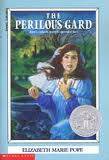
'The Perilous Gard' by Elizabeth Marie Pope (1974). This book doesn’t have the name recognition it deserves. Castles, fairies, kidnapping, underground caverns, and horrifying rituals – it has it all. Historical fiction that’s deeply archetypal, a dual hero’s quest. Is it fantasy? Is it psychodrama? You, the reader, must decide. I love, love, love this book.
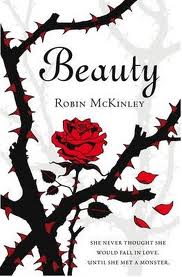
'Beauty' by Robin McKinley (1978). (And let’s cheat and throw in 'The Blue Sword and The Hero and the Crown' while we’re at it.) I have numerous journal entries from my junior high years, filled with ecstatic raptures of joy at Beauty’s existence in the world. I follow Robin McKinley on Twitter. One day I hope to meet her to tell her what her books meant to me. I hope my gushing won’t annoy her.
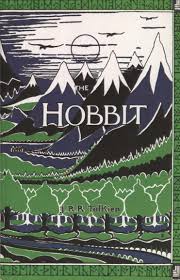
'The Hobbit', and 'The Lord of the Rings' trilogy by J.R.R. Tolkien (1937—1954). Do I dare call this teen literature? I think I do, whether it’s cheating or not. I re-read the entire saga every Christmas. I know its flaws like I know my own: it’s long. It’s heavy on landscape. Too many orcs to count. It’s half-written in Elvish. Women scarcely appear and only a handful do anything interesting. Nevertheless, always and forever, Tolkien’s will be the fantasy epic, and Middle-Earth will be a regular tourist stop for me."
***
A huge thank you to Julie for taking the time to write a blog for us, we hope you enjoy it as much as we have!
Julie's new book ‘All The Truth That’s In Me’ is out at the end of August, read on to find out more about it ...
‘All The Truth That’s In Me’
By Julie Berry
Published by Templar Publishing, 31st August 2013
RRP £10.99 (hardback)
ISBN 9781848779143
Judith can’t speak. Ever since the horrifying trauma that left her best friend dead, and her without her tongue, she’s been an outsider in her community of Roswell Station. All Judith can do is silently pour out her feelings to the love of her life, the boy who’s owned her heart as long as she can remember – even if he doesn’t know it – her childhood friend, Lucas.
But when Roswell Station is attacked, longburied secrets come to light, the cruel become kind, and Judith is forced to choose: continue to live in silence or recover her voice, even if what she has to say might change her world and the lives around her, forever.
Highly recommended for readers aged 12+
You can find out more Julie Berry and her work at http://www.julieberrybooks.com/
You can find out more about 'All The Truth That's In Me' at Templar Publishing's website http://www.templarco.co.uk/fiction/julie_berry.html
Follow Julie on Twitter @julieberrybooks
Like Julie's Facebook Page
Follow Julie's blog

What drew you to writing about characters against a 19th century backdrop?
No matter how far back in history you go you can always find the seeds of the present. But the 19th century is so very close. We can trace our modern attitudes and afflictions, as well as our triumphs, trials and tragedies, directly back to the Victorian events and personalities which spawned them. I’m not quite ancient yet, but my own father was born way back in 1907 - he only missed being a Victorian by six years. My grandfather would have been born around 1875, before the Zulu Wars. He’d have been about the same age as my hero Frank Gray in DISTANT THUNDER. That’s not all that long ago.
Having worked and lived on different continents, do you feel you have an upper hand in being able to write novels set (or partly set) in foreign places?
I think travel definitely helps. You do need to be able to conjure up the atmosphere of foreign places, and you simply have to have spent some time in them to do that. Of course it’s difficult to cover all the bases: I haven’t visited the Sudan, which features in my book, but I have lived in the Sahel region of Africa, and that was close enough.
I’ve always been fascinated by the world’s wild places, and while I’m no hairy-chested adventurer I’ve certainly moved around a good deal and lived I some odd locations. It definitely feeds into my writing. I have kept a diary of these travels over 40 years, and I refer to it a good deal for local incident and colour.
What are the limitations of writing about events taking place in a past era?
There is the temptation to treat people from earlier era as if they had all the same attitudes that we have today. Ideas about women or race, for example, were radically different in the 19th century from those of today (fortunately), even among people who considered themselves liberal. To be fair, they were radically different from today just 20 or 30 years ago, at least in their outward expression. On the other hand, historical writers very rarely tell it exactly as it was. A writer may wish to keep his or her characters’ attitudes entirely true to history, but very few really have the courage to do so. Most Victorians - even heroic and honourable ones - would have been considered racist misogynists by present standards, and that would shock a modern reader.
On the other hand, people from the past did not have different DNA from ourselves. There can be a temptation in historical writing to adopt a mannered and sonorous approach, especially in speech, on the principle that it sounds and feels more like what the reader will expect. In fact, a glance at the letters of Victorian soldiers, for example, will show that they expressed themselves very much as we do now, and that many words and phrases which we consider modern were in common parlance. My favourite is the expression ‘to hang out’, meaning to meet regularly with friends in some watering hole, which I had always assumed was a product of the 1960s: I discovered it recently in a letter written by Keats, circa 1810.
Another danger is that of making simple factual mistakes - giving people electric light before it was actually introduced or having them travel on underground trains before they were invented.
That said, though, readers are often surprised by how early some technological advantages actually did make their appearance. Did you know that there were electric cabs - yes, electric ones - in London by the mid 1890s? They were called ‘hummingbirds’: rather sweet, isn’t it? Unfortunately they weren’t very reliable, and good old-fashioned horses remained popular for another ten years and more.
 The theme of revenge is quite a common one in the modern novel. What sets ‘Distant Thunder’ apart from other stories about revenge? I like to think DISTANT THUNDER is not so much about revenge, as about the damage it does. I have tried to show how this burning sense of mission distorts Frank’s life, and thus the lives of those who love him - Grace, Mrs Rossiter, his brother Gifford. You might also argue, though, that as Frank’s leitmotif revenge is also responsible for everything else that happens to him. He would never have met Grace at all, for example, if it were not for this.Would you describe ‘Distant Thunder’ as a story about revenge or love, or something else altogether?To a large extent, it’s a story about the Empire. True, it’s a love story, and a murder mystery, and a tale of high adventure. But it has a lot to say about the way the British had acquired their empire, and prefigures the way they were soon to lose it. The Sudan campaign, for example, was in itself an act of revenge: Kitchener was sent to avenge Gordon’s death of fifteen years earlier because the British could not be seen to leave a defeat unanswered. They were afraid that would be interpreted as weakness and lead to rebellion in other subject territories. They had acted the same way towards the Zulus after the British defeat at Isandhlwana, and would do the same again against the Boers following the destruction of the British force at Majuba Hill. So Frank’s obsession is very much mirrored in the wider politics of his world.It is also a story about the position of women within Victorian society. The 1890s, when Grace grows up, was a period of extraordinary revolution in women’s politics. The Pankhursts were already active, women were leading strikes (Annie Besant), writing in newspapers (Flora Shaw), travelling alone to darkest Africa (Mary Kingsley), and campaigning for reform (Octavia Hill). Readers have sometimes told me that they find Grace too bolshie and independent for the Victorian age, but in fact she had many contemporary role models. It would be 1918 before women got the vote (and even then only for the over-30s) but feminist activism had already started to free women from supine obedience to men long before that.Grace and Frank are almost polarisingly different characters. What, to you, is the key thing that draws them together?The fact that they are polar opposites is what attracts them. Frank is at the bottom of the heap, and has learned to manipulate for his own ends the power structure which put him there. Grace is wealthy and privileged and somewhat ashamed of it, which makes her the champion of people she does not truly understand. They complement each other. Frank, though he becomes a soldier, is never committed to the Empire. She, though she sacrifices a great deal for her socialist principles, never entirely frees herself of her love of wealth and power. Each of them would like to make the other happy, but can see no way to do it. Each of them senses that the other would make them complete.

Your novel, ‘Redemption Blues’, is an entirely different kind of story to ‘Distant Thunder’. Which genre do you find it easier to write in - mysteries like ‘Redemption Blues’ or epic love stories like ‘Distant Thunder’?
I’m comfortable with both. From where I’m standing, they’re just my stories: I don’t set out to write something deliberately different. It’s simply that one story gets labelled as belonging to one genre and the next is assigned to another. For the record my other book currently out in English, THE WARNING BELL (Orion Books, 2010, written under my former pen-name, Tom Macaulay), is different again, a modern-day father-son story with strong links to WWII and Occupied France.
I’m not alone. Lots of other writers mix genres. Sebastian Faulks, Robert Harris, Martin Amis, Graham Swift….
Your novels are almost notorious for the tense mood that grips the reader throughout. What tips can you give aspiring authors wanting to maintain tension in their own stories?
Avoid some of the mistakes I keep trying to correct in my own writing! Start the story far enough into the action to grip the reader from the get-go. Avoid too many flashbacks, especially at the start. Keep the chapters short and try to end them on a note which forces the reader to turn the page. If the reader cares about the characters, there is tension implicit in the very smallest shift of emotion or action and no need for big explosions and lots of carnage. There is virtually no violence in ‘REDEMPTION BLUES’, for example, and that sold a million and was hailed by everyone as the ultimate page-turner.

Of the novels you have written, which is your favourite and why?
That’s like asking me which of my kids do I love most! Actually it’s harder to answer than that, because I don’t have any kids. For colour, action and scope I like ‘DISTANT THUNDER’; for a painstaking exploration of the alliances we make when we fall in love I like ‘REDEMPTION BLUES’; for an exposition of how wartime trauma can echo down the generations I like ‘THE WARNING BELL’.
Do you have any projects in the pipeline you’d like to share with us?
Sure. I’m currently writing the sequel to ‘DISTANT THUNDER’, which will appear next year. And before that look out for the English-language debut of ‘THE END OF WINTER’, which is closer to a genuine crime mystery than anything else I have written. I’d expect to see that in e-book within the next few weeks and in print copy very soon after that.
Where can fans find out more about you and your work?
Try my website www.tdgriggs.co.uk, follow me on Twitter @TDGRIGGS1 or just Google my name. And bear in mind, I’m happy to talk at readers’ groups, conferences, colleges, festivals, schools … just contact me through the site and we can discuss it.
Thanks to Tim for answering questions by Katy Hawkins.