Showing posts with label The Foyle Young Poets of the Year Award 2012. Show all posts

Wednesday, 27 June 2012

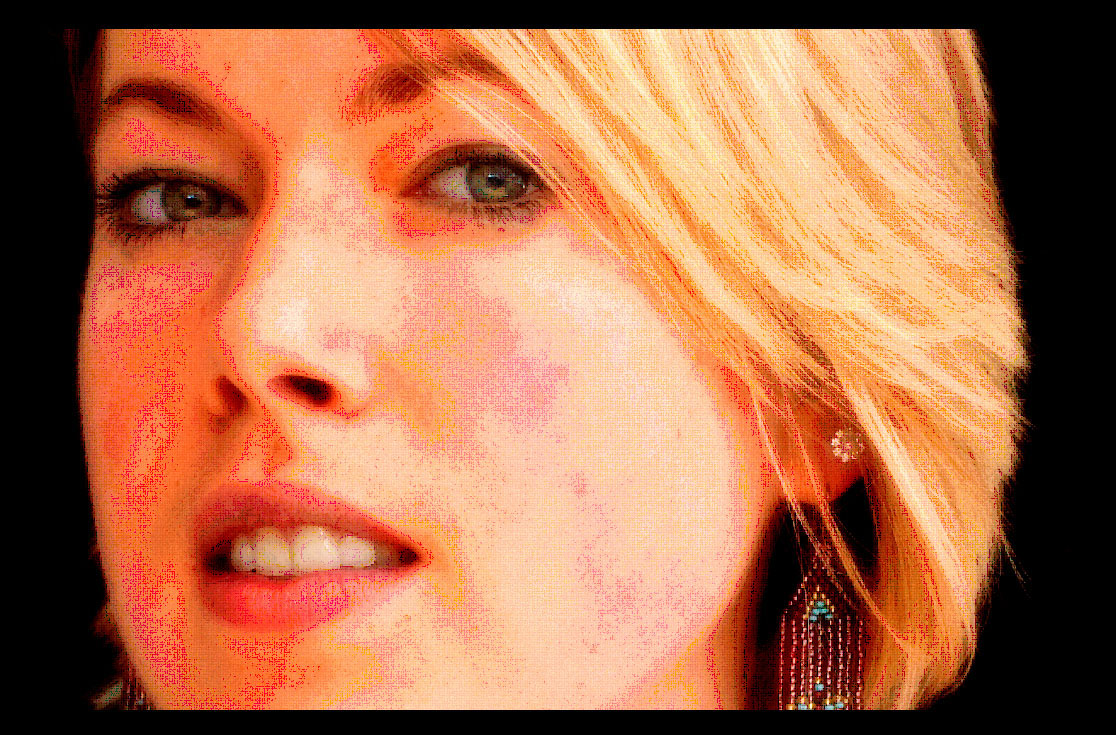
Interview with Helen Mort, Foyle Young Poets of the Year Award Judge for 2012

How has winning the Foyle Young Poets of the Year Award, an amazing 5 times, influenced your poetry?

It isn’t an overstatement to say that winning the Foyle Award changed my life, because it changed my sense of what was possible through poetry. After attending the winners’ Arvon course at Lumb Bank, I came back determined to make writing the focus of my life, and I did. As a young writer, you’re full of uncertainty and in some ways those uncertainties don’t vanish (‘am I good enough? Do I have anything new to say?’) but winning Foyle gave me a single certainty to counteract those doubts: the belief that poetry IS important. That certainty has steered my course ever since! In terms of writing itself, the Arvon courses I was lucky enough to go on as a result of winning Foyle encouraged me to read widely – I was introduced to the work of poets I would never have come across otherwise. I think reading has to be the basis of all writing, so those influences have been tremendously important.

As a judge this year, what will you be looking for in the winning poems?

I’ll be looking for poems that take me aback: the kind of poem that would creep up and move my chair when I’m not looking, or trip me up when I least expect it, only to catch me just before I hit the ground. Poems that surprise the reader and have obviously surprised the writer too. I also value sincerity in poems. That doesn’t mean they have to be true, because often the ‘truth’ of an experience or feeling is best captured by a kind of pretence. But they should come from the heart. As Ted Hughes said, it’s important as a writer to distinguish between things you’re merely curious about and things which are a deep part of your life.

Do you feel there is enough being done to encourage and support both young poets as well as those further along in their career?

I think there are a wealth of opportunities for young writers today, it’s almost hard to know where to begin: initiatives like the Young Poets’Network or the Young Writers’ Hub
(http://www.nawe.co.uk/young-writers-hub.html ) offer support to new poets whilst competitions like Foyle and the Eric Gregory Awards offer a platform for them to get their writing noticed; it’s important that the emphasis isn’t always on competition, I think, because so much of writing is far removed from that. The best thing about winning Foyle for me was the chance to meet and work with other writers, both my own age and older. I think it’s important that young writers interact with writers further along their careers, whether that’s in a mentoring capacity or more informally, because those dialogues introduce both writers to new ideas and material.

Do you feel poetry is shedding its somewhat old-fashioned and traditional stereotype and becoming more appealing to a wider audience?

I think it’s sometimes unhelpful to talk about a division between ‘traditional’ poetry and newer means of engaging audiences (such as the UK’s thriving performance scene) because they’re all part of the same art, but yes, those stereotypes do still exist and I hope that the variety of guises poetry comes in nowadays do help to make people more open minded about what poetry is. We all recognise poetry (and good poetry) when we encounter it, but it’s very difficult to turn that into a definition of poetry. Perhaps that refusal to be pinned down is part of poetry’s strength: it sneaks in when we aren’t looking, disguised in a second hand coat, and takes our breath away.

Can you recommend any poetry collections for 11-17 year-olds?

First of all, don’t be put off by thinking anything’s ‘too difficult’ for you when it comes to poetry. I’d recommend reading (and hearing) as much of everything as you can, but here are a few collections that I particularly enjoyed as a teenager or have found inspiring more recently:

Simon Armitage, ‘Zoom’ – one of the first collections I read, Armitage’s inventiveness always makes me do a double-take and I still savour the images in his first collection, like the car horn 'moaning / softly like an alarm clock under an eiderdown' in the chilling first poem ‘Snow Joke’.

Tim Burton, ‘The Melancholy Death of Oyster Boy’ - shows how much fun you can have with poetry if you want.

Jo Shapcott, ‘Phrase Book’ - great narratives, Shapcott can give voice to anything. Her poems are a good example of how poetry enables strange and magical transformations.

John Hegley, ‘The Adventures of Monsieur Robinet’ - I always go back to John Hegley's work because he makes me laugh, whilst also making me think.

Kay Ryan, ‘Odd Blocks’ - Kay Ryan has a very unique way of looking at the world and honouring its peculiarities.

Ian McMillan, 'I Found This Shirt' - one of my favourite poets, Ian McMillan is committed to showing us how truth is stranger than fiction and he's a great example of how you can get witty and startling material from the world around you.


A huge thanks to Helen for answering our questions. For further information on 2012's Foyle Young Poets competition please visit http://www.poetrysociety.org.uk/content/competitions/fyp/.


Interview with Christopher Reid, Foyle Young Poets of the Year Award

As a judge this year, what will you be looking for in the winning poems?

Pretty much what I’d be looking out for in any poem: signs of imagination, of feeling, of original thought, of a sense of form, of a musical ear.


Do you feel there is enough being done to encourage and support both young poets as well as those further along in their career?

If exams didn’t govern everything in school life, if the curriculum allowed space for the sort of wide, deep and curiosity-led reading that is the surest grounding for any writer’s career, there might be hope. 


Do you feel poetry is shedding its somewhat old-fashioned and traditional stereotype and becoming more appealing to a wider audience?

Poetry is and always had been in a state of self-renewal. The motivation for renewal comes mainly from the young, dissatisfied with what their elders have handed down to them, but whether this leads to a wider audience, or merely a different one, I couldn’t be sure.


Can you recommend any poetry collections for 11-17 year-olds?

'The Rattle Bag', edited by Seamus Heaney and Ted Hughes and 'Emergency Kit', edited by Jo Shapcott and Matthew Sweeney, will introduce new readers what some of our finest poets consider some of the finest poems in English.


Do you have any words of advice or tips for budding poets?

Keep working at the art and enjoying it – simultaneously.


A huge thanks to Christopher for answering our questions. For further information on 2012's Foyle Young Poets competition please visit http://www.poetrysociety.org.uk/content/competitions/fyp/.

Monday, 30 April 2012

The Foyle Young Poets of the Year Award 2012


"Winning the Foyle Young Poets of the Year changed the way I saw myself and my future. In short, it made me realise I could devote my life to the thing I loved, if I had enough determination". Former Foyle Winner and 2012 Judge, Helen Mort.

The Foyle Young Poets of the Year Award is an opportunity for any young poet aged 11-17 to accelerate their writing career. Since it began 15 years ago the Award has kick-started the career of some of today’s most exciting new voices, including this year’s judge Helen Mort. With over 7,000 young poets entering each year from across the UK and beyond, to reach the top 100 is to be marked out as a rising literary star. The fifteen overall winners will be published in an anthology and be invited to a week-long residential Arvon course or receive a poet visit to their school followed by distance mentoring (age dependent).  All 100 poets (15 overall winners and 85 commended) benefit from ongoing support and encouragement, via publication, performance and internship opportunities. Any young person writing in English (from the UK or far beyond) can enter the competition.

For full details and to enter online go to www.foyleyoungpoets.org

Deadline: 31st July 2012. Judges: Helen Mort and Christopher Reid.